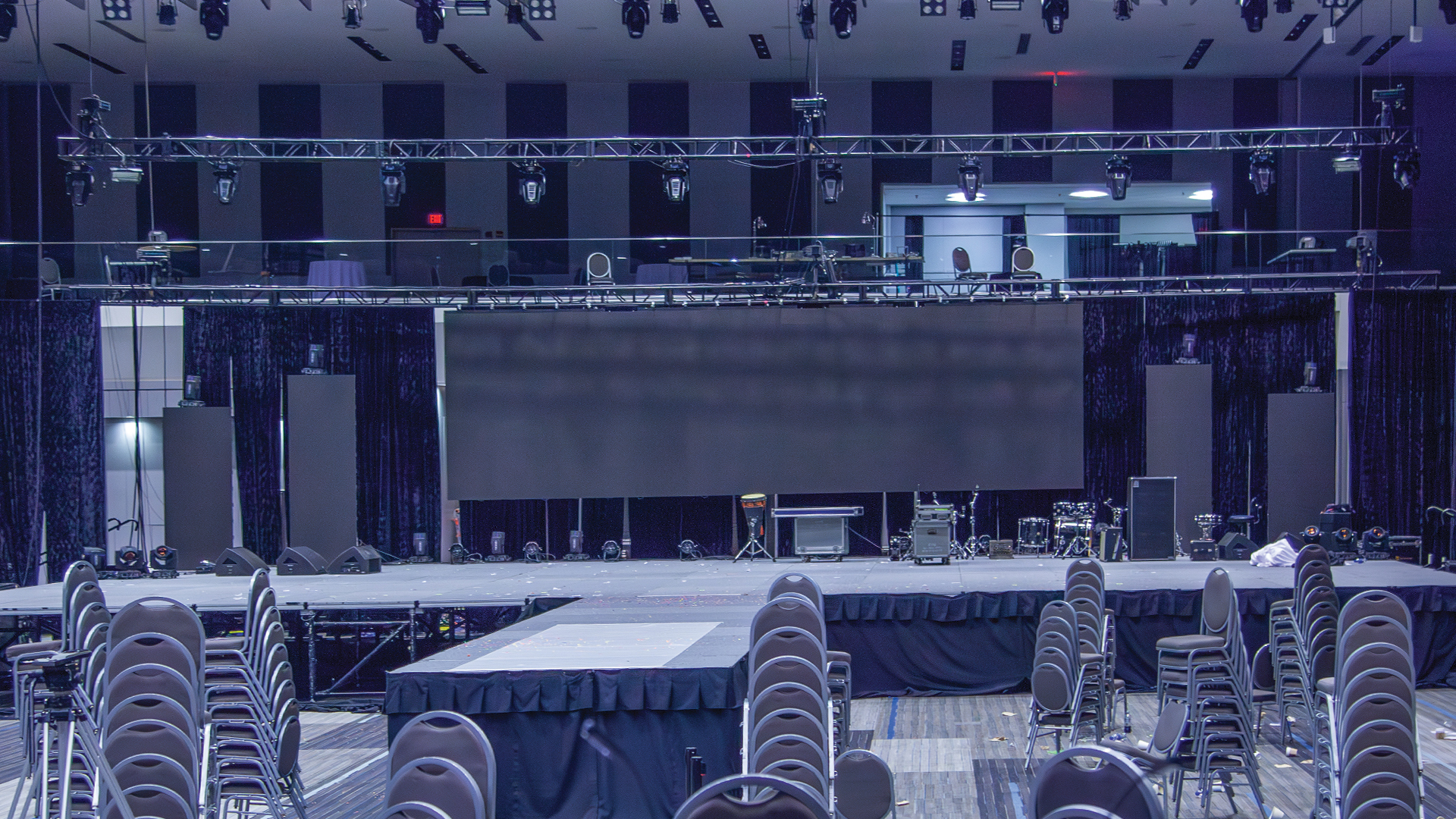
An LED wall that looks spectacular in a fixed-install environment and a touring-ready LED rig are two entirely different engineering problems. The fixed install is designed to go up once and stay up for years. The touring rig must go up and come down — cleanly, safely, and without critical damage — potentially hundreds of times over the course of a tour. It must fit in a truck. It must be assembled by crew who may be seeing the specific configuration for the first time. It must tolerate the physical abuse of road transportation, repetitive rigging, and the thermal cycling of going from a cold truck to a warm venue and back again, week after week. Building a rig that survives this life requires design decisions that are invisible in the finished look but fundamental to the system’s operational longevity.
Panel Selection for Road Durability
Not all LED panels are engineered for touring. The distinction between install-grade and touring-grade LED panels is significant, though not always clearly communicated in manufacturer marketing. Touring-grade panels — products from ROE Visual, Absen, Unilumin, and Leyard in their touring-specific product lines — are characterized by reinforced cabinet construction (typically die-cast magnesium alloy or high-grade aluminum), front-access serviceability (modules and receiver cards replaceable from the front without dismantling the rig), and IP-rated connectors that maintain connection integrity through repeated mate-demate cycles.
The ROE Visual Black Marble 2H and ROE Visual CB5 MKIII are examples of panels specifically designed for touring applications, with military-grade connector systems, reinforced corner protection, and tool-free module replacement that allows a deck tech to swap a damaged module in under two minutes without the panel leaving the rig. This front-serviceability requirement alone eliminates a large portion of the install-grade panel market from touring consideration.
Structural Systems: Touring Truss vs Dedicated LED Frames
LED walls can be flown from standard touring truss systems or built on dedicated LED wall structural frames designed specifically for the purpose. The truss approach — suspending panels from Tomcat, Tyler GT Truss, or James Thomas Engineering trussing using motor chains and panel mounting brackets — provides maximum flexibility in wall configuration but requires more rigging expertise to achieve a flat, plumb plane across a large surface. Any inaccuracy in motor trim height creates visible steps or waves in the LED surface that are magnified at the viewing distances typical of large-venue production.
Dedicated LED structural frames — systems like the James Thomas LED Scope, Milos Arenacurve, or manufacturer-specific touring frames from ROE and Absen — are engineered to provide a dimensionally accurate mounting plane out of the case. The panels bolt to the frame in a predetermined pattern, and the frame hangs from motors or sits on ground support with adjustable leveling feet. Setup time is typically faster than truss-based systems for standard configurations, and the structural predictability reduces the rigging expertise required at each venue.
Power Distribution for Touring LED Rigs
A medium-scale touring LED rig — 12 meters wide by 6 meters tall of 3.9mm pitch panels running at moderate brightness — consumes 20-30 kilowatts of power. Distributing that power across a touring rig that configures differently in every venue requires a modular power distribution strategy that avoids long cable runs and provides clean, regulated power to every panel group. Touring-specific power distribution boxes — units from Powersoft, Socapex junction systems, or custom builds from production electricians — allow power to be distributed from a single venue feed point to multiple branches serving different sections of the wall.
The NEC (National Electrical Code) in the United States and BS7671 (IET Wiring Regulations) in the United Kingdom provide the regulatory framework for temporary power distribution in touring environments. Productions operating internationally need to understand both frameworks, as the connector standards, voltage systems (120V single phase vs 240V single or three-phase), and earthing requirements differ significantly. A touring rig designed for North American voltages needs step-down transformers or alternative power supplies for European tours — a detail that is expensive to discover on load-in day in Berlin.
Data and Signal Distribution in a Touring Rig
The data infrastructure of a touring LED rig — the cabling that carries processed pixel data from the LED processor to the receiver cards in each cabinet — must be as touring-ready as the panels themselves. This means touring-grade data cables with Neutrik etherCON or Locking RJ45 connectors rather than standard Cat5e patch cables that will not survive repeated handling. It means redundant data loops — running data in a ring topology that bypasses any single cable or connector failure — implemented through Novastar or Brompton processing systems that support loop-through redundancy natively.
Signal distribution from the video source to the LED processor should similarly be built with redundancy — a primary SDI or HDMI feed with an automatic failover to a backup source via a seamless switcher like the Decimator MD-CROSS or Kramer VS-21H. On a touring production where show continuity is a commercial obligation, single points of failure in the signal chain are not design options — they are risks that need to be engineered out.
Case Design and Transport Configuration
The case design for a touring LED rig is as important as the rig design itself. Panels that ship loose in generic flight cases develop surface damage and connector wear that degrades performance over time. Custom-fit panel cases with high-density foam or modular cell inserts protect panels during transport while allowing rapid deployment — the crew member who opens the case should be able to see immediately how many panels are in the case and in what orientation they need to mount. Weight per case is a touring discipline in itself: standard IATSE and union labor agreements specify maximum lift weights for stagehands, and cases that exceed these limits slow load-in and create injury risk. The production company that engineers its rig for single-person lifting where possible — typically cases under 50 pounds — will always move faster in venue than one that requires two-person carries throughout the system.
