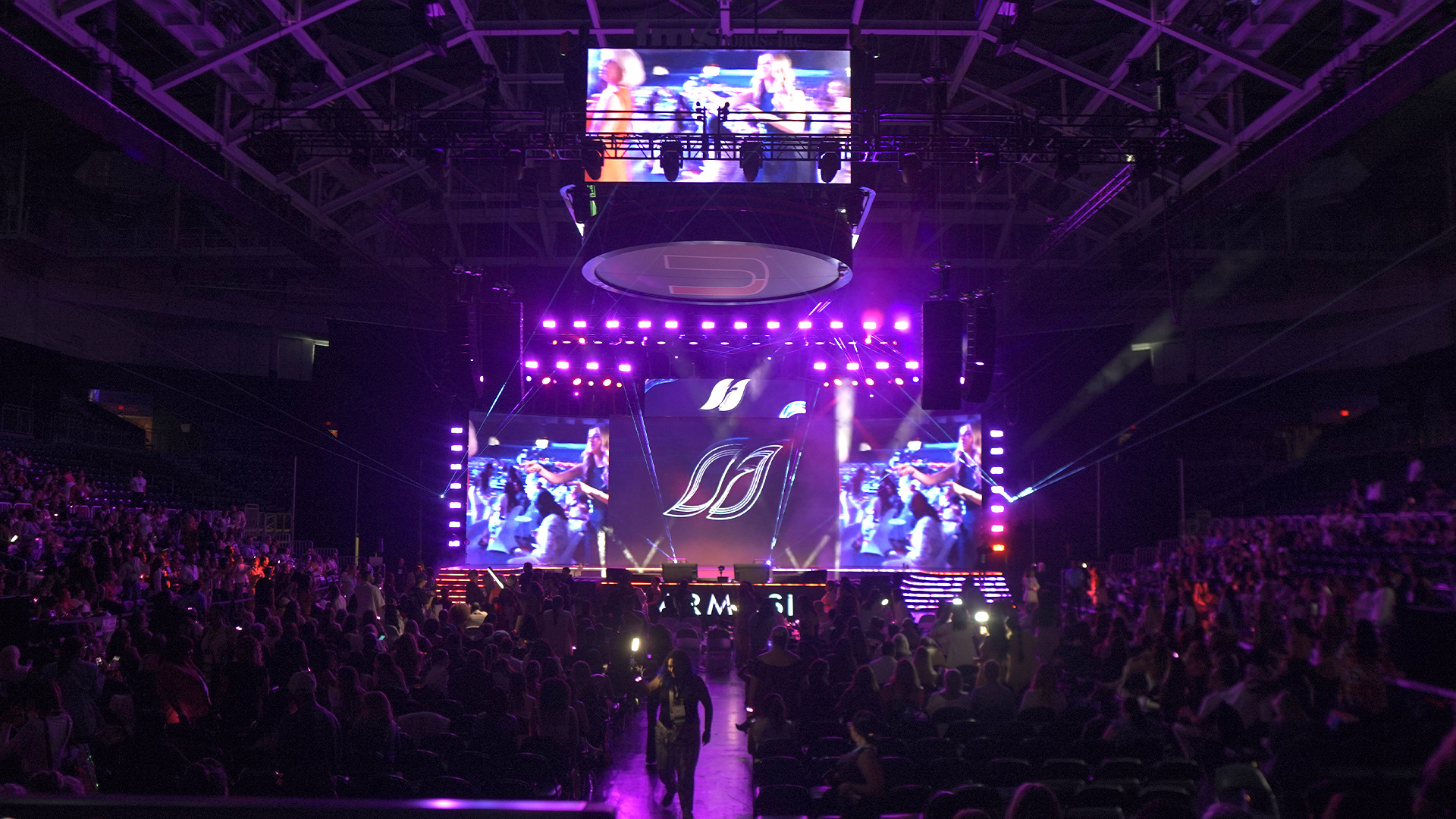
Fifty Countries, Fifty Standards, One LED Wall
A hybrid event streaming to 50+ countries simultaneously encounters technical standards diversity that would have been considered a niche engineering challenge in 2019 and is now a routine production requirement. The same LED wall serving the live audience in Frankfurt must simultaneously feed a broadcast signal that satisfies HD-SDI technical standards for European streaming, NTSC-compatible encoding for North American distribution, and compressed digital formats for markets where bandwidth constraints dominate the viewing experience—all from a single physical installation calibrated for a single room’s lighting conditions.
This multi-standard requirement is not merely a signal routing challenge. It affects the LED wall specification, the content design brief, and the calibration methodology in ways that fundamentally change the production approach. An LED wall optimized solely for its live audience can be calibrated for the viewing angles and lighting conditions of the specific room. An LED wall simultaneously serving live audiences in Frankfurt and streaming audiences in Singapore, Mexico City, Lagos, and Sydney must be calibrated for the lowest common denominator of the technical standards and display devices that those diverse audiences will use to view the content.
Broadcast Signal Distribution: The Technical Infrastructure
The signal distribution infrastructure that takes an LED wall’s visual output from a single physical installation to 50+ countries’ streaming audiences involves a production chain whose technical complexity exceeds the LED wall hardware itself in budget and expertise requirements. The Disguise media server’s broadcast output—clean digital video signals representing what the LED wall is displaying—travels from the server to a broadcast processing rack where it undergoes the format conversion, color correction, and encoding required for each target market’s distribution standard.
Grass Valley and Ross Video broadcast production equipment provides the routing and processing backbone for hybrid events at this scale. A typical distribution chain involves: Disguise output to AJA Ki Pro Ultra recorder (for local archive and confidence monitoring), simultaneously to a Grass Valley IQMIX frame synchronizer (providing the stable, latency-compensated signal that broadcast distribution requires), then to the streaming encoder infrastructure that packages the signal for each target market’s delivery protocol—RTMP, HLS, SRT, or the CDN-specific formats of YouTube Live, Twitch, and proprietary enterprise streaming platforms.
The color management workflow across this distribution chain is where most hybrid productions encounter their most persistent quality challenges. The LED wall’s output is calibrated using Brompton Technology’s Tessera processor in a specific color space; the broadcast camera captures this output through its own color science; the broadcast switcher may apply its own color correction; the streaming encoder applies additional compression that affects color accuracy; and the viewer’s display device has its own gamut and white point that may not match any of the upstream calibration references. Managing this chain requires explicit color pipeline documentation—a formal description of the intended color transformation at each stage—that most productions don’t create and then wonder why the wall looks different in different market outputs.
Latency Management for Interactive Hybrid Events
Interactive hybrid events—where remote participants contribute to live sessions through polling, Q&A, or collaborative activities—encounter a latency challenge that passive streaming events don’t face. The streaming delay between the live event and the remote viewer’s screen—typically 15–45 seconds for consumer streaming platforms, 3–8 seconds for professional low-latency SRT delivery, and 300–500ms for ultra-low-latency WebRTC protocols—creates a disconnect between what’s happening on the LED wall and what remote participants are seeing that can make interactive elements feel disjointed or confusing.
The LED wall’s role in interactive hybrid event production extends beyond passive backdrop to active participation interface. When the program includes real-time voting results displayed on the LED wall—a common corporate event engagement technique—the display system must receive the voting data, process it through a Notch or TouchDesigner visualization, and update the LED wall with sub-second latency from the data source, while the streaming distribution system handles the asynchronous delivery of that updated display to remote viewers with the latency characteristics of their delivery protocol.
Managing this multi-latency environment requires explicit communication with remote event organizers and participants about which interactions are synchronous (real-time) and which are asynchronous (delayed). LED wall content that acknowledges remote viewers explicitly—displaying their names, their geographic locations, their responses—bridges the latency gap experientially even when it cannot bridge it technically. The productions that serve hybrid audiences most effectively are those whose content design explicitly accounts for the asynchronous experience rather than treating remote participation as a degraded version of live attendance.
Localization: Serving Diverse Cultural Visual Standards
Hybrid event LED wall content that serves 50+ countries must navigate visual cultural standards that differ more significantly across global markets than most European or North American production designers appreciate. Color symbolism varies across cultures: white communicates purity and celebration in Western contexts but mourning in several East Asian traditions; red communicates danger in safety contexts but celebration and prosperity in Chinese cultural contexts; and green carries different symbolic associations in Islamic, Irish, and East Asian viewing contexts.
The content design brief for global hybrid events should include explicit cultural review of the visual language planned for the LED wall, evaluated against the specific cultural contexts of the major audience markets. Production companies serving the global hybrid event market have developed internal review processes that route visual content through cultural consultants before approving it for global distribution—a process that adds 1–2 weeks to the content development timeline but prevents the brand damage that cross-cultural visual misalignment creates.
Typography and text legibility across global audiences presents a further LED wall content challenge. Roman alphabet text at a size legible to native English readers may be illegible at the typical LED wall viewing distance for viewers less fluent in the Latin script; similarly, content incorporating Arabic, Chinese, Japanese, or Hindi text for global audiences must be designed with the specific rendering characteristics of LED pixels in mind—character forms in these scripts require higher pixel density to render legibly than Roman alphabet equivalents, making pixel pitch selection a multilingual communication decision as much as a technical one.
The Commercial Architecture of Hybrid Event Production
The commercial architecture of hybrid events serving 50+ country audiences has evolved rapidly from the emergency remote-attendance model that COVID-era events necessitated into a structured commercial offering with its own pricing, technical standards, and client expectations. Production companies that positioned themselves as hybrid event specialists during the 2020–2022 period—investing in the broadcast infrastructure, streaming expertise, and LED wall calibration knowledge that multi-country hybrid events require—now occupy market positions that their competitors are still working to replicate.
The pricing model for hybrid event LED wall production differs from pure live event production in ways that reflect the broadcast production value it incorporates. LED wall rental, media server provision, and operator fees for the physical installation are familiar cost categories. Added to these are: broadcast signal infrastructure rental (cameras, broadcast switchers, router), streaming encoding and delivery (CDN costs scale with viewer counts and duration), multi-market color calibration sessions, and the content adaptation costs of creating material that works equally well for live and streaming audiences. Productions that quote live event rates for hybrid event scope are underpricing themselves in ways that become apparent when the production margin is calculated post-event.
For production companies building hybrid event capability, the most important investment is not equipment—it is human expertise at the broadcast/live interface. The technical director who understands both the lighting designer’s visual intent for the LED wall and the broadcast director of photography’s color and exposure requirements is rare, commands premium rates, and determines the quality of the hybrid production outcome more than any single piece of equipment. Developing this expertise internally, through training investments that bridge the live event and broadcast production cultures, is the human capital investment that defines competitive advantage in the global hybrid event market.
Standards Compliance Across 50+ Market Streaming
The regulatory and technical standards landscape for video streaming across 50+ countries presents a compliance challenge that hybrid event production companies must navigate carefully. GDPR in Europe, PIPL in China, and equivalent data protection regulations in dozens of other markets affect what audience interaction data can be captured and displayed on the LED wall during streaming—a consideration that interactive hybrid events must evaluate before deploying engagement features that collect or display personal data.
Loudness normalization standards for streaming platforms—ITU-R BS.1770 in Europe, ATSC A/85 in North America—affect the audio content that the LED wall’s content system produces in integrated AV presentations. Content designed to sound good on the live event’s PA system may measure above the streaming platform’s loudness limit, triggering automatic gain reduction by the streaming encoder that changes the audio character the streaming audience hears. Productions aware of this requirement master their streaming audio to target levels (-16 LUFS for most streaming platforms) that are specifically different from the live event mix—a requirement that adds a mix engineering workstream to the production workflow.
The production companies that have successfully served global hybrid audiences consistently across 50+ country markets are those that treat standards compliance as a production planning requirement rather than a post-production discovery. Building a market-specific technical requirements document as part of every hybrid event’s pre-production phase—identifying the specific streaming, data protection, and accessibility requirements of each target market—provides the framework within which the LED wall content, broadcast signal chain, and streaming infrastructure can be designed to comply from the outset rather than being retrofitted to compliance requirements discovered after content is created.
