In the precise choreography of a multi-camera live production, the tally light is the smallest fixture on the rig and arguably the most important communication tool on the set. That simple red lamp — or the increasingly sophisticated tally system behind it — is the silent contract between the director in the production control room and every human being standing in front of a lens or holding a microphone. Get the tally system wrong, and you’ve compromised the entire communication architecture of the show.
The History and Evolution of Tally Systems
Tally systems trace their origins to the early days of television broadcasting in the 1940s and 1950s, when live television production was the only option — videotape wouldn’t exist as a broadcast medium until Ampex demonstrated the VRX-1000 in 1956. The original tally circuits were simple relay-based systems wired directly from the video switcher to a lamp on the camera body. When the director selected a camera on the program bus, the circuit closed, the lamp lit, and both the camera operator and the on-screen talent knew that camera was live.
Modern tally systems have evolved dramatically. Contemporary solutions from companies like TSL Products, Glensound, Grass Valley, and Ross Video integrate directly with digital video switchers via GPI/GPO interfaces, SNMP, or proprietary control protocols. The NDI Tally Arbiter open-source project and commercial equivalents allow tally states to be distributed over IP networks — enabling systems where a remote camera operator in a different building, or even a different city, sees accurate program and preview tally states.
Program vs Preview: The Two-State System
A fundamental principle of professional tally systems is the distinction between program (live to output) and preview (next cut selected). The standard color convention — red for program, green for preview — is so deeply embedded in broadcast culture that breaking from it on a show requires explicit briefing of every camera operator. Some productions add a third state: amber for iso recording, indicating a camera is being recorded even if not on program output.
This two-state system is not merely informational — it’s operational. A camera operator who sees preview green has time to reframe, adjust focus, or pan to a new position before being cut to program. A director who knows their tally system is reliable can call cuts with confidence. A tally system that lags, mis-fires, or drops states entirely destroys the trust between the director and the floor — and trust is the currency that keeps a live multi-camera show running at speed.
Tally in Complex Multi-Camera Environments
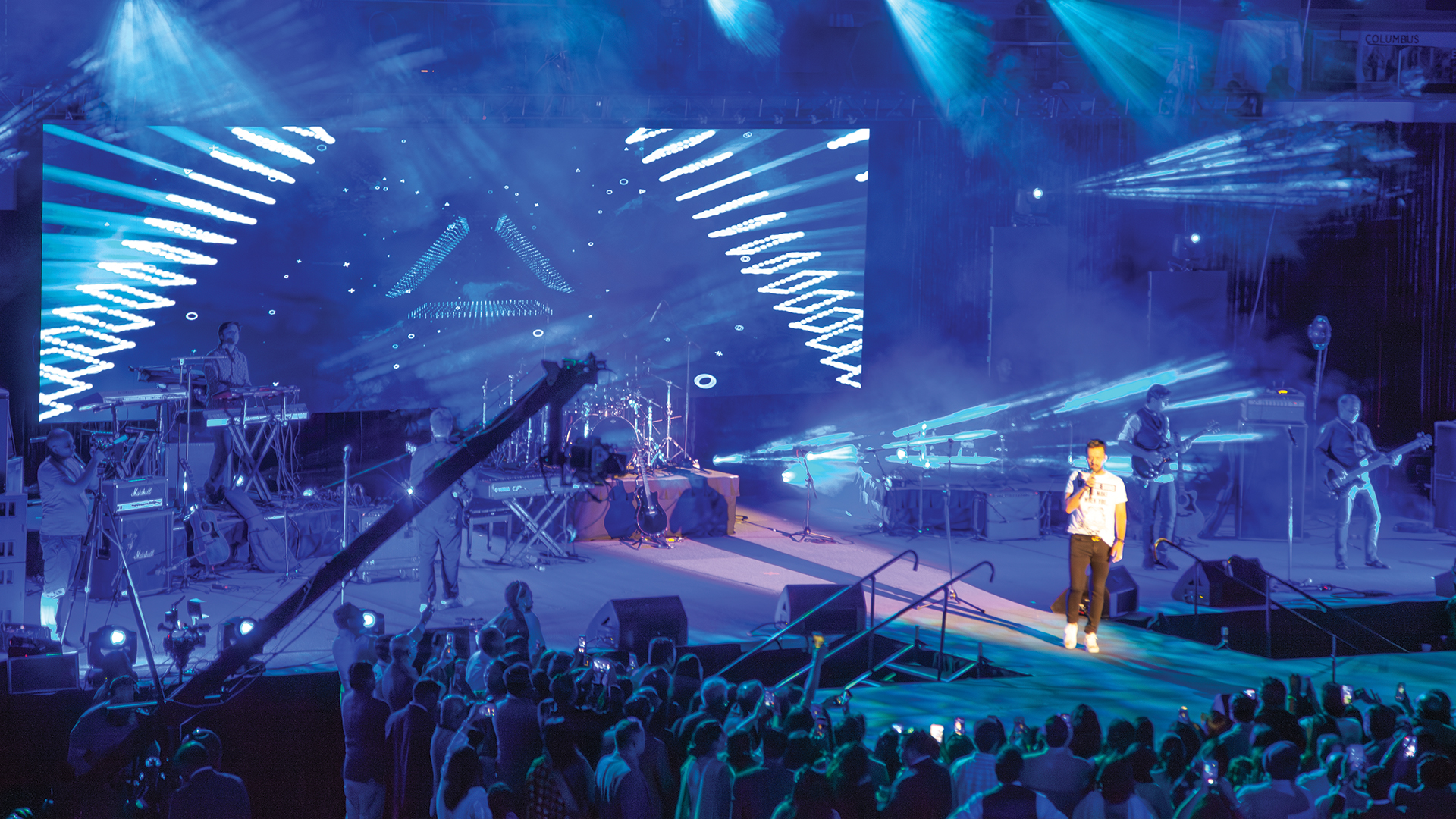
Corporate events, awards ceremonies, and broadcast television productions routinely deploy 12 to 24 cameras or more, each needing accurate tally. The logistical complexity compounds when you add robotic camera heads from Telemetrics or Vinten, jib arms, and cable cam systems — all of which need tally signals distributed to remote heads that may have no crew member present to observe a traditional camera-mounted tally light.
In these environments, wireless tally systems become essential. Products like the Decimator MD-HX with tally passthrough, the TallyBox from Techni-Bond Electronics, or CuePoint wireless tally — combined with the Blackmagic ATEM switcher’s built-in tally over ethernet — allow each camera position to receive program/preview state without running dedicated tally copper through every camera cable. For hybrid productions sending cameras to remote operators, NDI tally over IP is the standard approach.
Tally for On-Screen Talent
An often-overlooked dimension of tally system design is the talent experience. Newscasters, corporate speakers, and television hosts rely on camera-mounted tally lights — and the proximity and brightness of those lights — to know which lens to address. A tiny tally indicator lost in stage lighting is useless. Large-format halo tally rings from manufacturers like Litepanels and Autocue are standard in broadcast environments for exactly this reason. Some studio productions go further, building tally lighting into the studio architecture itself — colored strips above camera positions that are visible to talent even at distance.
On event stages where I-MAG screens are the primary visual medium, tally states must also feed the video director and the media server operator. Productions using Disguise media servers can ingest tally states to trigger automatic camera label overlays or lower thirds, creating a seamless connection between the switcher’s decision and the output of the graphics chain.
Tally Failures and How to Prevent Them
Tally system failures fall into predictable categories. Ground loops in analog tally circuits cause false triggers. IP address conflicts in networked tally systems cause entire camera banks to go dark. Switcher firmware updates can break tally protocol compatibility with downstream devices. The professional approach is a pre-show tally check that cycles every camera through program and preview states, with a dedicated crew member walking the floor to verify each position. This takes twelve minutes. Discovering a tally failure mid-show, with a director calling blind and talent staring at the wrong lens, is a problem that takes much longer to recover from.
Tally systems are the nervous system of a multi-camera production — invisible when they work, catastrophic when they fail. Invest in quality hardware, build redundancy into networked systems, brief your crew thoroughly, and test obsessively before the first run-through. The director’s confidence — and the talent’s performance — depends on it.
