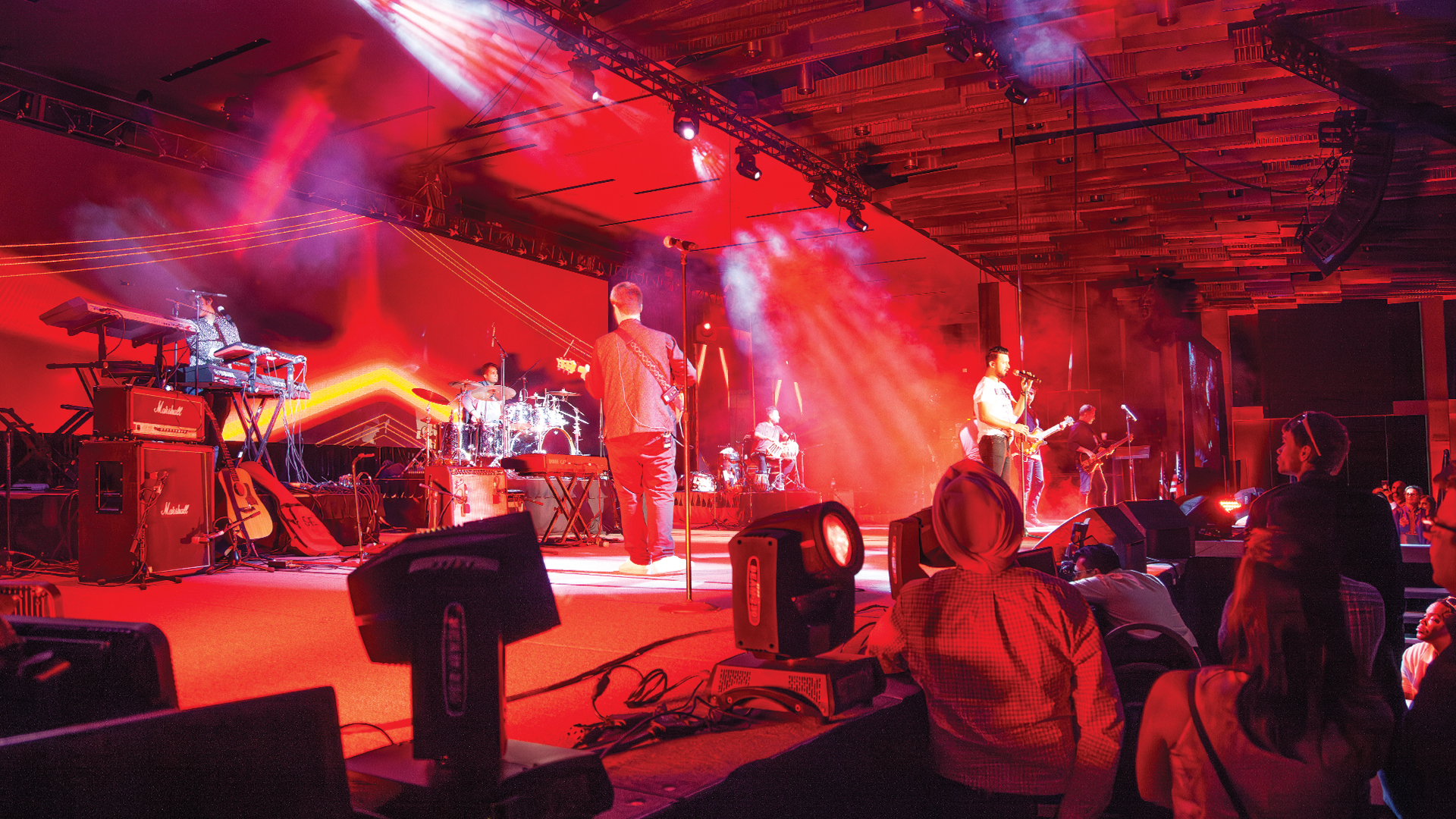
In professional live production, redundancy is not pessimism — it’s the engineering acknowledgment that any single component, no matter how reliable, is capable of failing at the worst possible moment. For audio playback — the backing tracks, click tracks, stems, and show music that a touring artist’s live show depends on — redundant playback architecture is the line between a recoverable incident and a cancelled show. The discipline of building, testing, and operating redundant audio playback systems is one of the most technically exacting in live sound engineering, and it has produced some of the most sophisticated fault-tolerant audio systems in any domain of professional audio.
The Architecture of Redundant Playback
A redundant audio playback system operates on the principle of simultaneous operation — two (or more) complete playback systems running in phase-locked synchronization, each producing identical output, with automatic or manual failover to the backup system in the event of a primary failure. The goal is not to have a spare that you switch to when the primary fails; the goal is to have two primaries, one of which happens to be the active output at any given moment, so that switching between them is instantaneous and transparent.
The dominant platform for professional redundant audio playback is Ableton Live running on Apple MacBook Pro computers — widely adopted because of its rock-solid stability, intuitive session view for live triggering, and the ecosystem of hardware controllers like the Ableton Push 3 and Native Instruments Maschine that give playback engineers a hands-on control interface. The competing platform is QLab by Figure 53, which takes a more cue-based approach more familiar to theatrical engineers and is particularly strong for complex shows with many discrete cue segments.
Primary and Backup Machine Configuration
In the standard dual-machine redundant setup, both machines run identical show sessions — the same files, the same routing, the same cue structure — with both triggered simultaneously by the same timecode or MIDI cue. The machines are kept in synchronization by their shared timecode reference, typically SMPTE LTC generated by the DiGiCo console or a dedicated timecode generator. Both machines output audio simultaneously to a stereo mix bus or multi-stem routing at the digital audio workstation (DAW) output, with output levels matched within 0.1dB to ensure transparent switching.
The switching mechanism is the heart of the redundancy system. Manual switching — an engineer pressing a button to route from primary to backup — introduces human reaction time into the failover window, typically 2-5 seconds. Automatic switching via audio presence detection — circuitry that detects the absence of signal on the primary output and automatically routes to the backup — can reduce failover time to under 100 milliseconds. Units like the Yamaha MTX5-D with ProVisionaire control scripting, or the BSS Audio BLU-800 with automatic input priority switching, are used in broadcast and live production specifically for this capability.
File Management and Session Consistency
The dual-machine redundancy model fails completely if the two machines are not running byte-for-byte identical sessions. Content differences — a stem file that was replaced on the primary but not the backup, a plugin version mismatch that causes different audio processing on each machine, a sample rate discrepancy that causes one machine’s output to be 0.05% faster than the other — destroy synchronization and mean the backup is not a backup: it’s a different show that happens to be running simultaneously.
Professional touring audio teams manage this through session preparation discipline that treats show file distribution as a deployment operation. Every change to the primary session is replicated to the backup before the next show using verified file sync. The FNV hash or MD5 checksum of critical audio files is verified on both machines after sync. Plugin registrations and software versions are confirmed identical before every tour leg. This level of rigor is not excessive — it’s the minimum discipline required to trust a redundant system with the integrity of a live performance.
Network Triggering and Remote Control
Modern redundant playback systems are increasingly controlled via network protocols rather than physical MIDI connections — OSC (Open Sound Control) allows any networked device to trigger cues on both machines simultaneously with sub-millisecond triggering precision. QLab’s OSC triggering and Ableton’s Max for Live OSC integration allow show controllers like the Figure 53 GO Button, stage manager iPad apps, or lighting consoles to trigger playback events on both machines with a single command.
Some touring productions go further, implementing watchdog monitoring software that continuously checks the health of both playback machines and generates automated alerts — or triggers automatic failover — if either machine exhibits CPU overload, disk read errors, or audio dropout events. Open-source monitoring frameworks like Nagios adapted for audio production contexts, or commercial solutions developed by production technology specialists, run as background services on both machines and report to a monitoring dashboard at the FOH position throughout the show.
Testing Redundancy Before the Show
A redundant system that has never been tested is not a redundant system — it’s a hope. The professional discipline of failover testing — deliberately cutting the primary machine mid-playback and verifying that the backup assumes output without audible interruption — must be performed in every rehearsal environment, not reserved for a theoretical emergency that may never occur. Testing reveals level matching issues, synchronization drift, routing anomalies, and failover timing problems that are invisible during normal operation but catastrophic during a real failure. Document the test results. Include failover testing in the pre-show technical checklist. The show that has tested its redundancy is the show that can trust it — and in live production, trust is the only currency that matters under the lights.
