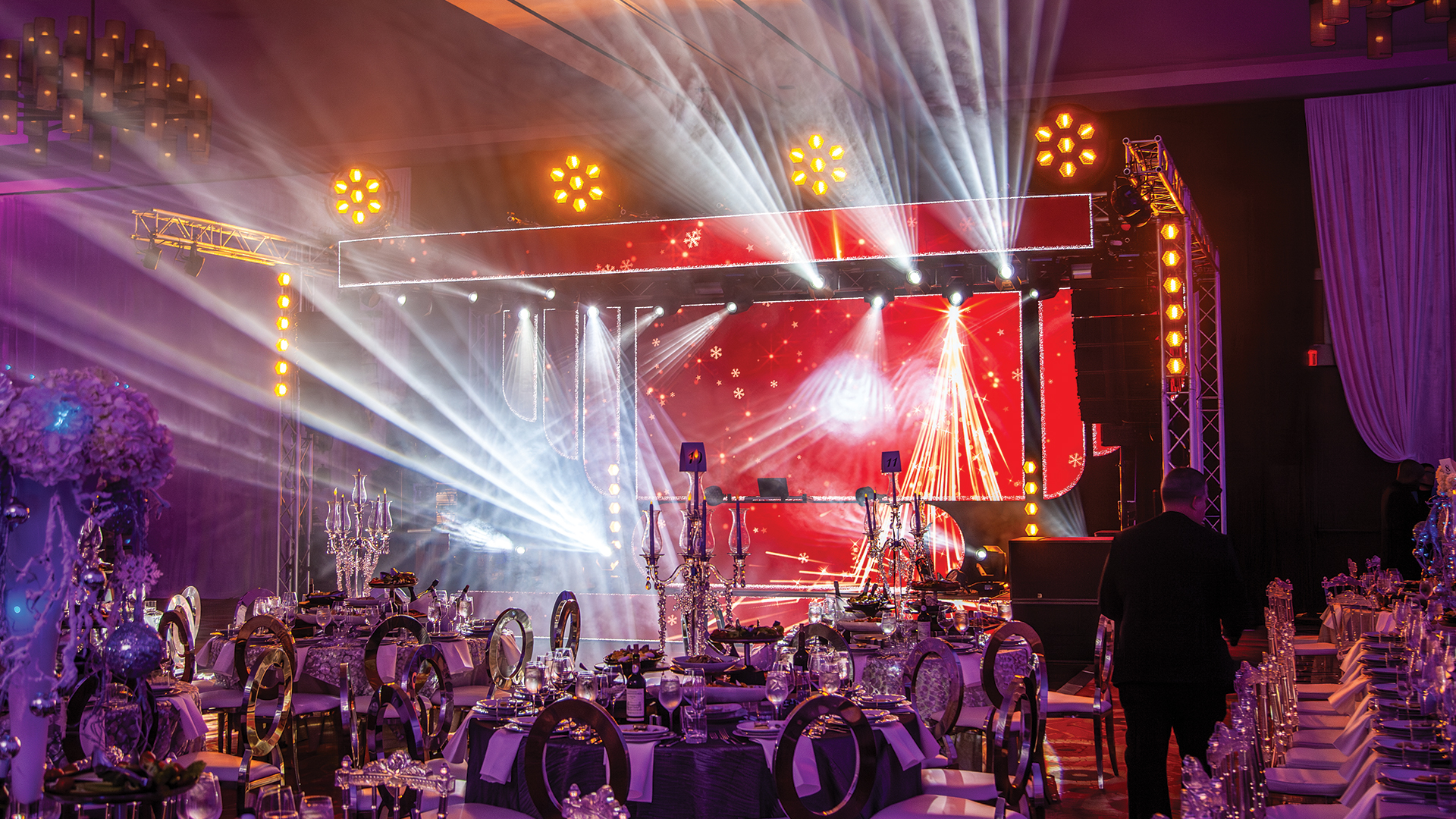
The corporate event landscape is littered with productions where technically impressive LED walls and sophisticated media server systems are populated with content that looks like it was designed by a committee of people who’ve never been to a concert. Generic lower thirds in corporate blue, speaker nameplates in Arial Bold, and full-screen holding graphics that communicate nothing except that the content budget ran out before the creative did. The productions that stand apart — that make attendees feel they’re experiencing something designed rather than assembled — are the ones that have built a custom content template system that gives presenters control of a visual environment that was architected by professionals.
The Architecture of a Template System
A content template system for a presenter-driven event is not a folder of PowerPoint slides — it is a parameterized visual framework built in a real-time rendering environment that adapts to presenter-specific data without requiring a graphic designer to rebuild assets for every speaker. The underlying technology is typically a media server like Disguise, Notch Builder, Ventuz, or Unreal Engine running a scene that receives data inputs — speaker name, title, session name, brand colors — and generates custom visuals in real time.
The Ventuz platform, widely used in broadcast graphics and large-scale event production, is purpose-built for data-driven visual templates. Its node-based workflow allows designers to build fully parametric scenes where every visual element — typography, color, motion, layout — is driven by structured data. A template built in Ventuz for a 500-speaker conference can generate custom name cards, session backgrounds, and animated transitions for every presenter without any manual per-presenter design work.
Designing Templates That Scale
The discipline of template design for scale is fundamentally different from single-project graphic design. Every design decision — typeface choice, animation duration, color palette, layout grid — must be evaluated not just aesthetically but structurally: will this still work when the speaker’s name is seventeen characters? When the company logo has a dark background? When the session title runs to three lines? Designing for edge cases is not a pessimistic exercise — it’s the difference between a template system that works through a two-day conference and one that breaks on session three.
Typography in template systems requires parametric sizing — font sizes that scale with text length rather than being fixed. Ventuz and Notch both support dynamic text scaling natively. Disguise with Notch blocks integrates Notch’s real-time rendering directly into the Disguise timeline, allowing graphic templates to respond to both data inputs and show cues simultaneously — a powerful combination for productions with complex show flow.
Speaker Data Integration and Management
The operational backbone of a template system is data integration — the pipeline that gets accurate speaker information from the event management system into the media server in time for each session. This sounds straightforward; it rarely is. Speaker names change spelling. Titles are updated at the last minute. Photo assets are submitted in the wrong format at 11 PM the night before the show. Building a template system that is resilient to data quality issues — that degrades gracefully when a photo is missing, displays a placeholder when a company logo hasn’t been received, truncates elegantly when a title is too long — is production engineering as much as creative design.
Data management platforms like Cvent, Bizzabo, and Swoogo are common sources of truth for speaker information at corporate events. Building an API integration that pulls confirmed speaker data directly from the event management platform into the media server environment — rather than relying on manual data entry from a spreadsheet — eliminates a category of human error that causes lower third mistakes on live broadcast. Pixotope and Singular.live offer pre-built integrations with major event platforms specifically for this use case.
Branding Consistency Across Multiple Visual Zones
A multi-room conference or multi-stage festival presents a brand consistency challenge that template systems are uniquely positioned to solve. When the same master template drives visual output across a keynote stage, breakout rooms, digital signage, and streaming graphics simultaneously — all from a single data source — the brand identity reads coherently regardless of where an attendee engages with the content. This level of integration requires a media server architecture that supports multiple output zones with shared data pools, a capability that Disguise, Green Hippo Hippotizer, and Resolume Arena all provide in different forms.
Productions managing brand-sensitive events — product launches for Fortune 500 companies, investor day presentations, annual general meetings — treat visual consistency across all output zones as a deliverable as important as the show itself. The template system is the infrastructure that makes this consistency possible at scale, without requiring a designer to manually update each output zone for each speaker change.
Testing Templates With Real Data Before Show Day
Template systems must be tested with real speaker data — not placeholder data. A template that looks perfect with ‘Jane Smith, Chief Executive Officer’ may break with ‘H.R.H. Crown Prince Alexander of North Macedonia, Honorary Patron.’ Testing with production-realistic data, including edge cases sourced from the actual speaker list, is the discipline that separates template systems that work from template systems that work in the demo. Reserve time in the production schedule specifically for data-driven template testing — ideally one day before the first rehearsal, with the full speaker dataset loaded.
