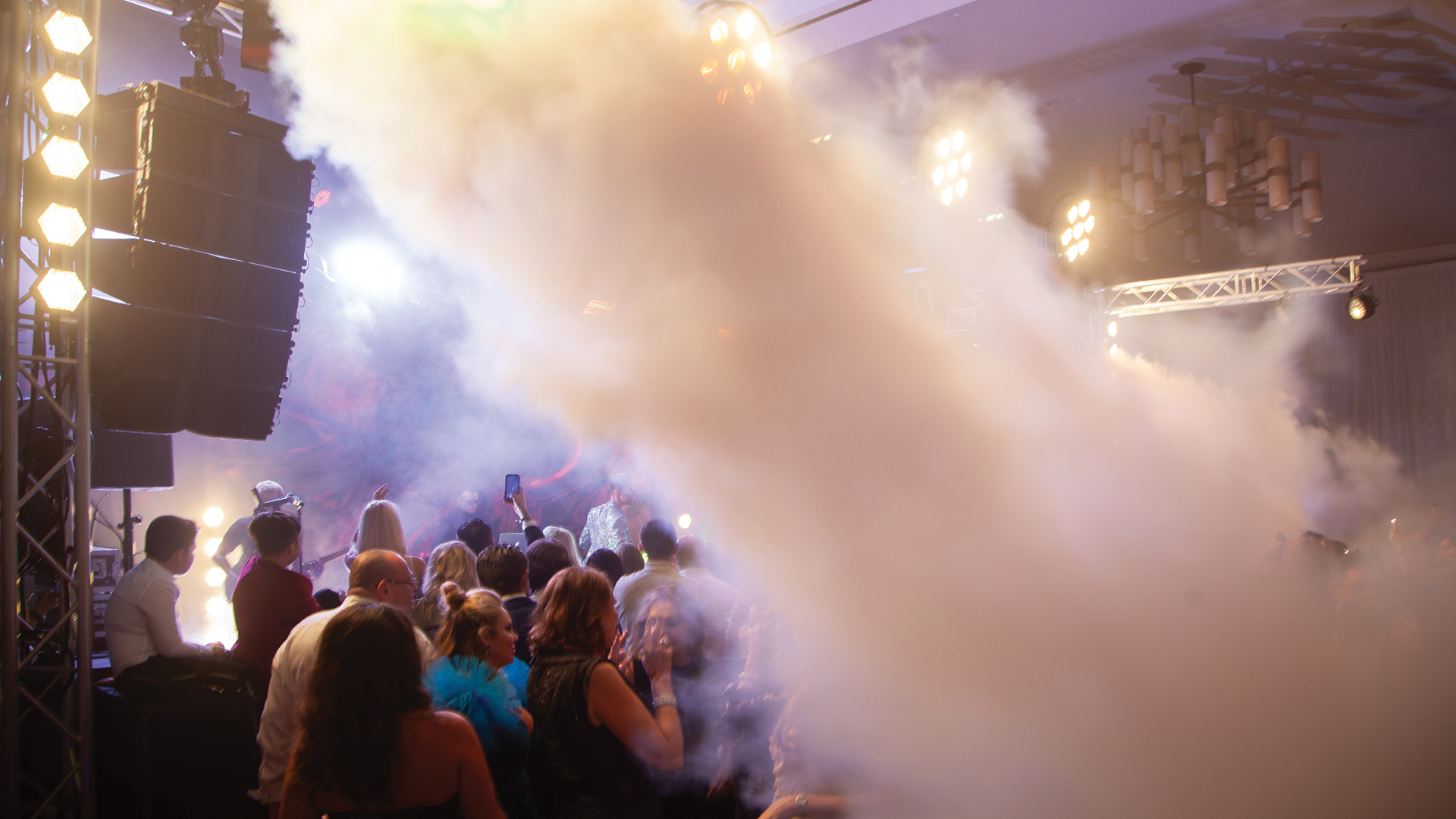
When Atmospheric Effects Steal the Show
The Moment the Air Took Center Stage
MDG atmosphere generators are designed to enhance, not dominate. Their ICE FOG Q systems produce low-lying fog that should disappear into the background, making floor effects magical without overwhelming performances. Look Solutions Unique hazers create even distributions of atmospheric particles that make lighting visible without obscuring anything else. Yet sometimes these supporting players decide they deserve leading roles.
The history of theatrical fog is the history of restraint. From early steam effects through dry ice through modern glycol and glycerin fluids, the goal has always been enhancement rather than dominance. Fog should suggest mystery, add depth to lighting, and create atmosphere without announcing its presence. When fog announces itself, something has usually gone wrong. Or wonderfully right.
The 2021 Festival Takeover
During an electronic music festival in the Netherlands, a combination of MDG MAX 5000 fog machines and unexpected weather conditions created a phenomenon that veterans still discuss with reverence. A temperature inversion trapped the atmospheric effects at perfect density, creating a visible stratum of fog exactly at head height that persisted for hours.
Artists who performed during these conditions found their shows transformed. Lighting beams became solid, tangible things that audiences felt they could touch. Laser effects from Kvant systems and Pangolin Beyond software became three-dimensional environments rather than flat projections. The fog had become a canvas, and every light source an artist’s brush.
The production management team initially considered this a problem, but audience response made clear they were witnessing something special. Social media exploded with footage of the fog phenomenon. The festival’s reputation benefited enormously from an accident that no one could have planned.
The Chemistry of Scene-Stealing
Understanding why fog occasionally dominates requires appreciating the atmospheric physics involved. Particle size determines visibility, with optimal sizes for lighting effects falling between 0.5 and 5 microns. Smaller particles dissipate quickly; larger particles fall to the ground. The sweet spot creates effects that can persist unexpectedly when conditions favor them.
Temperature and humidity affect fog behavior dramatically. MDG fluid vaporizes in heated exchangers, then condenses into tiny particles as it exits into cooler air. When ambient temperature and humidity align with specific values, the resulting fog can achieve stability that transforms it from effect to environment.
Airflow is the crucial variable that productions rarely control completely. HVAC systems designed for audience comfort can distribute fog in unexpected patterns. Open doors create drafts that carry effects beyond intended areas. The combination of these factors explains why identical fog programming produces different results every night.
Intentional Fog Dominance
Some productions deliberately feature fog as a primary element. Cirque du Soleil’s “O” at the Bellagio uses fog in combination with water and lighting to create effects that audiences cannot categorize. The fog is not enhancement; it is content, carefully controlled to produce specific emotional responses.
Theatre productions have increasingly embraced atmospheric effects as storytelling devices. The National Theatre’s technical department has developed sophisticated approaches to using fog narratively, creating weather, suggesting memory, and establishing mood through carefully controlled atmosphere.
Electronic dance music events often feature fog as deliberately dominant. The DJ booth disappears into haze while laser systems create immersive environments that would be impossible without dense atmosphere. For these productions, fog is not supporting cast but essential collaborator.
Technical Responses to Fog Ambition
When fog decides to dominate unexpectedly, production teams have limited options. Fans can disperse effects but risk carrying fog into unwanted areas. Reducing output helps eventually but cannot quickly clear existing accumulation. Temperature adjustments in climate-controlled venues offer some control but work slowly.
DMX control through grandMA3 or ETC Eos consoles allows operators to reduce fog output in real time, but the lag time between command and visible effect can span minutes. Automated hazers with remote monitoring via apps have improved responsiveness, but physical processes cannot be hurried beyond certain limits.
The industry has developed protocols for fog management that include pre-show testing under show conditions, backup plans for excessive accumulation, and communication systems that alert operators to developing problems before they become visible to audiences.
Embracing the Unexpected
The most skilled atmospheric effects technicians have learned to work with fog’s tendencies rather than fighting them constantly. They develop intuition for conditions that will produce unusual results. They position equipment to take advantage of natural air movement. They program with awareness that fog will behave according to physics, not necessarily programming.
Some of the most memorable moments in live entertainment history have involved unplanned fog dominance. The 1975 Led Zeppelin performance at Earls Court featured fog effects that seemed to consume the entire venue, creating an environment that concertgoers still describe as otherworldly. Whether this was intentional remains unclear from historical records, but the effect was legendary.
Modern productions can learn from these accidents. The tools for atmospheric control have never been more sophisticated. MDG ICE FOG systems offer unprecedented control over low-lying effects. Look Solutions provides equipment that can produce fog at precisely calibrated densities. Yet the most successful applications often involve surrendering some control, allowing the atmosphere to develop organically within broad parameters.
