Corporate conferences and seminars represent significant investments in communication, education, and relationship building. Whether organizations gather hundreds of employees for annual meetings or convene industry experts for specialized seminars, the quality of audio-visual production directly influences whether these investments achieve their intended outcomes. Thoughtful AV deployment transforms ordinary business gatherings into engaging experiences that participants remember and act upon.
Creating Professional First Impressions
Attendees form impressions about event quality within moments of entering conference spaces. Professional AV production signals organizational competence and attention to detail from the first glance. Crisp displays, clear audio, and polished production values communicate that the hosting organization values the audience’s time and has invested in creating meaningful experiences.
Pre-event content displayed on screens welcomes attendees while providing useful information about schedules, sponsors, and logistics. This content transforms wait time into orientation, ensuring audiences arrive at opening sessions informed and ready to engage. Ambient music and lighting create atmosphere that sets appropriate tone for event objectives.
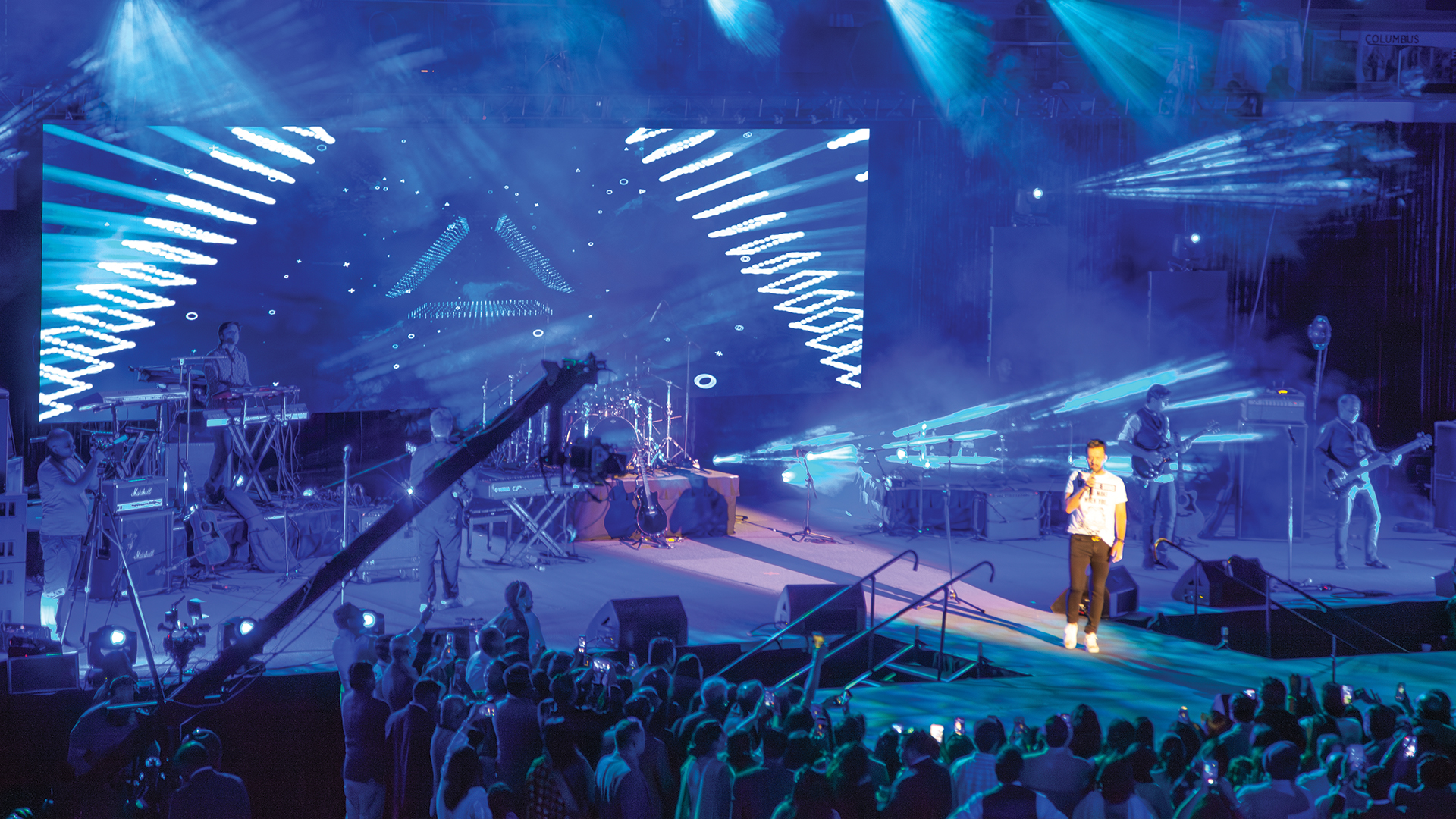
Stage design incorporating LED displays, professional lighting, and architectural elements establishes visual hierarchy that focuses attention and conveys production value. Even modestly sized events benefit from intentional stage design that elevates speakers above mere podium presentations.
Audio Clarity for Large Spaces
Corporate conferences often occur in ballrooms, convention centers, and multi-purpose spaces not designed primarily for speech intelligibility. Professional sound systems overcome these acoustic challenges, ensuring every word reaches every seat clearly. Distributed speaker systems place audio sources throughout audience areas, reducing the extreme volume levels near stages that centralized systems require.
Wireless microphone systems allow speakers to move naturally while maintaining consistent audio quality. Lapel microphones free hands for gestures and demonstrations. Handheld microphones serve Q&A sessions where audience participation requires flexible audio pickup. Backup systems stand ready for seamless switching if primary microphones experience issues.
Visual Support for Presentations
Complex information becomes accessible when supported by well-designed visual presentation. Professional AV ensures slides, videos, and demonstrations display with colors, contrast, and resolution that communicate effectively throughout large spaces. What looks adequate on laptop screens often fails completely when projected at scale—professional systems account for these differences.
Multiple display surfaces allow different content types to appear simultaneously. Primary screens might display presenter slides while secondary screens show speaker close-ups or supplementary information. This multiplicity keeps audiences engaged while ensuring no participant misses important visual content due to seating position.
Real-time annotation and highlighting tools allow presenters to emphasize key points dynamically. Touch-enabled displays or digital annotation systems let speakers mark up slides during presentations, directing attention and reinforcing important concepts. These interactions feel more natural than laser pointers while being visible throughout entire venues.
Video Playback and Integration
Corporate messages increasingly incorporate video content—executive communications, customer testimonials, product demonstrations, and training materials. Professional AV ensures these videos play seamlessly without the buffering, audio sync issues, and quality compromises that plague improvised playback setups.
Live video feeds from remote presenters or demonstration locations extend conference content beyond physical venue limitations. High-quality video conferencing integration allows distant experts to participate meaningfully, their images displayed at scales comparable to in-person presenters. Audio integration ensures remote voices achieve presence matching their visual representation.
Lighting for Speaker Presence
Lighting transforms how audiences perceive speakers and their messages. Properly lit presenters appear confident, authoritative, and engaging. Poor lighting creates shadowed faces, unflattering appearances, and camera footage unsuitable for recording or streaming. Professional lighting design addresses both live viewing and recorded capture requirements.
Front lighting illuminates speakers evenly without harsh shadows. Back lighting separates presenters from backgrounds, creating visual depth that makes stages more interesting. Color temperature consistency across all lighting elements prevents the mixed-source appearance that makes productions look amateurish.
Audience lighting affects engagement and camera shots showing crowd reactions. Strategic illumination allows cameras to capture engaged audiences while maintaining focus on stage content. Lighting transitions between presentation segments and interactive portions help audiences understand when their participation is expected.
Interactive and Engagement Technologies
Modern conferences incorporate technology that transforms passive audiences into active participants. Polling systems gather real-time feedback displayed on screens, showing attendees that their input matters while generating data for organizers. Q&A platforms allow attendees to submit and upvote questions, ensuring sessions address topics of greatest audience interest.
Audience response systems enable game-show style competitive elements that energize sessions. Teams compete on knowledge questions, response speed, or other criteria with scores displayed prominently. These gamification elements increase engagement while reinforcing learning objectives through active recall.
Social media walls display attendee posts in real-time, encouraging sharing while creating sense of community among participants. Moderated feeds ensure appropriate content while showcasing diverse perspectives and experiences across the event.
Breakout Room Support
Large conferences typically include breakout sessions in smaller spaces requiring their own AV support. Professional production extends to these satellite rooms, ensuring consistent quality regardless of session location. Portable equipment packages deploy quickly, providing each breakout space with necessary displays, audio, and presentation support.
Networking between main session and breakout rooms allows content sharing and overflow viewing. When breakout sessions reach capacity, video feeds allow additional participants to follow content from alternate locations. This flexibility maximizes audience access to popular sessions.
Recording and Content Capture
Conference content represents significant intellectual property worth preserving for future use. Professional recording captures presentations with quality suitable for on-demand viewing, training programs, and marketing purposes. Multi-camera coverage provides visual variety while dedicated audio feeds ensure clear speech capture.
Post-event content packages extend conference value far beyond attendance dates. Edited highlight reels, full session recordings, and audio podcasts allow those who could not attend to benefit from content. Sales teams use recorded customer testimonials and product demonstrations throughout the year.
Live streaming expands reach to remote audiences unable to attend in person. Professional streaming production matches in-room quality, ensuring remote viewers receive experiences comparable to physical attendance. Interactive features allow remote participants to submit questions and participate in polls alongside in-person audiences.
Technical Reliability and Support
Corporate events cannot afford technical failures that disrupt carefully planned agendas. Professional AV includes redundant systems, backup equipment, and experienced technicians who prevent problems and respond immediately when issues arise. This reliability protects organizational reputation and ensures presenters can focus on content rather than technology concerns.
Technical rehearsals verify all systems function properly before audiences arrive. Presenters become comfortable with microphones, clickers, and display systems. Content gets tested on actual screens at actual sizes, revealing issues invisible during desktop preparation. This preparation investment pays dividends through smooth execution.
On-site technical support remains available throughout events, positioned to respond instantly to any issues. Experienced technicians anticipate problems based on venue conditions, speaker behaviors, and equipment characteristics, often preventing issues before audiences notice anything wrong.
Conclusion
Professional AV production transforms corporate conferences from obligatory business functions into memorable experiences that achieve communication objectives. The investment in quality production pays returns through increased engagement, improved message retention, and enhanced organizational reputation. As expectations for conference quality continue rising, organizations that embrace professional AV production distinguish themselves as serious communicators committed to audience experience.
