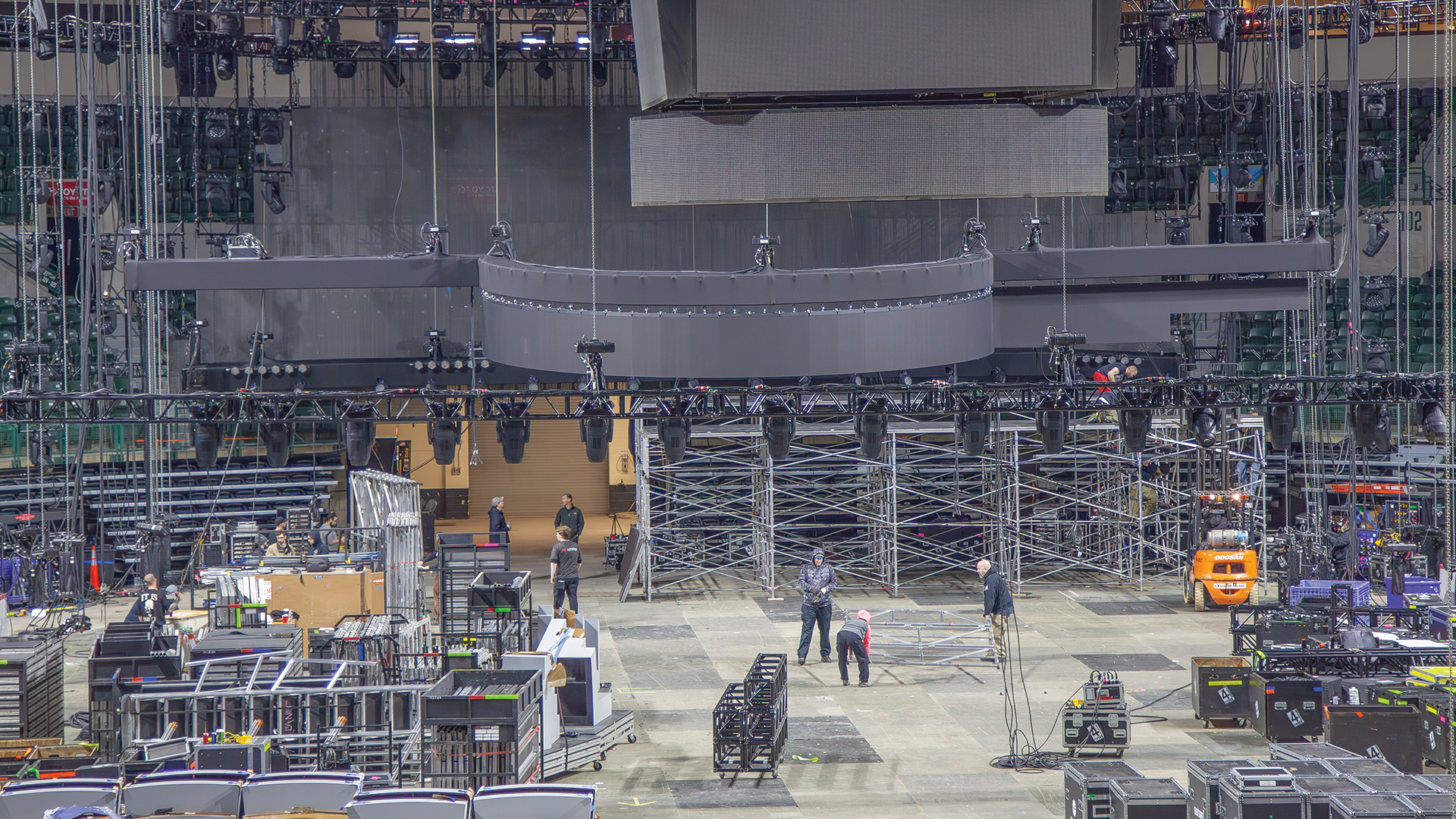
When Mother Nature decides to crash your production, the difference between catastrophe and triumph comes down to preparation, equipment choices, and nerves of absolute steel. Every seasoned touring crew carries scars from battles with the elements—and stories that would make insurance adjusters weep into their spreadsheets.
The 2019 European Festival Circuit Disaster
The summer of 2019 tested every outdoor production team working the European festival circuit. What started as unusual heat warnings in June transformed into a full-blown crisis by July, with temperatures exceeding 40°C across Belgium, France, and Germany. The Roskilde Festival deployment that year became legendary—not for the performances, but for how the crew kept everything running while their own equipment threatened to melt.
Production manager Sarah Chen recalls coordinating shifts around heat indexes. “We switched to a rotating crew schedule borrowed from military operations. Nobody touched rigging during peak afternoon hours. All truss work happened before 10 AM or after 7 PM. Our chain motors from CM Lodestar actually handled the heat better than we expected—those units earned their reputation that summer.”
Equipment Adaptations That Saved the Day
The L-Acoustics K2 arrays remained remarkably stable throughout temperature fluctuations, though the crew implemented a morning and evening SMAART analysis routine to catch any drift in system alignment. The real heroes were the LED video walls—a ROE Visual CB5 configuration that held up admirably despite direct sunlight exposure that would normally demand expensive shade structures.
Arctic Touring: When Cold Becomes the Enemy
Heat gets the headlines, but cold weather production presents challenges that can shut down a show without warning. The 2017 Scandinavian winter tour with a major metal act tested every assumption about equipment tolerances. Temperatures dropped to -28°C during the outdoor press event in Tromsø, Norway, and the crew discovered that their wireless microphone systems—specifically Shure Axient Digital units—required specialized battery management protocols.
RF coordinator Marcus Lindqvist developed what he calls the “hot pocket” system. “We kept spare lithium-ion battery packs rotating between insulated cases with hand warmers and the transmitters. Cold batteries don’t just lose capacity—they can fail catastrophically. The trick is maintaining the packs between 15°C and 25°C until the moment they’re needed.”
Cable Management in Frozen Conditions
Standard touring cable becomes rigid and prone to cracking below -10°C. The crew switched entirely to cold-rated cable assemblies from Van Damme for the duration, at triple the cost but with zero failures. The multicore snake runs required heated conduit in exposed sections—an innovation that has since become standard practice for Nordic tours.
Monsoon Season Survival: Southeast Asian Tours
The Southeast Asian festival circuit during monsoon season represents the ultimate test of weather-resistant production design. The 2018 Singapore Grand Prix support act deployment faced three consecutive days of torrential downpours that challenged every waterproofing assumption.
Lighting designer Yuki Tanaka had specified IP65-rated fixtures throughout—Claypaky Scenius Unico and Robe MegaPointe units dominated the rig. “The IP rating saved us, but what really mattered was our cable management. Every connection got wrapped with self-amalgamating tape and positioned to prevent water pooling. We lost exactly zero fixtures to water ingress over three days of continuous rain.”
The Console Protection Protocol
The front-of-house position remained the vulnerability. The DiGiCo SD7 at FOH was protected by a custom weatherproof enclosure that the crew had fabricated from marine-grade materials. The monitoring position ran an Avid S6L under similar protection. Both consoles maintained full functionality throughout, though the crew noted that touchscreen responsiveness suffered in high-humidity conditions—a factor that led to increased reliance on physical fader movements.
Historical Perspective: Weather Disasters That Changed the Industry
The AV production industry’s approach to extreme weather owes much to the lessons learned from catastrophic failures. The 2011 Indiana State Fair stage collapse, which killed seven people when wind gusts exceeded structural tolerances, fundamentally transformed how the industry approaches outdoor rigging safety. Wind speed monitoring became mandatory, and the introduction of anemometer integration into production management protocols followed directly from this tragedy.
The original Woodstock festival in 1969 faced weather challenges that would terrify modern production teams. The sound reinforcement system—primitive by today’s standards—survived thunderstorms that should have caused massive electrical failures. The system, designed by Bill Hanley, featured innovations in grounding and power distribution that established principles still relevant today.
Modern Weather Monitoring Integration
Contemporary touring productions integrate real-time weather data into their operational workflows. The Davis Instruments Vantage Pro2 weather stations have become standard equipment, feeding data directly into production management software. Wind speed thresholds trigger automatic alerts, and humidity readings inform decisions about equipment protection.
Production coordinator Elena Vasquez implemented a tiered alert system for her touring company. “Yellow alert at 25 mph sustained winds—we evaluate vulnerable elements. Orange at 35 mph—all flyware comes down. Red at 45 mph—full show stop and audience evacuation protocols engage. The system removes emotional decision-making from weather calls. The data decides.”
Predictive Planning and Route Optimization
Advanced tour routing software now incorporates historical weather pattern analysis. Avoiding monsoon season in Southeast Asia or scheduling around the European heat dome probability windows has become as important as venue availability. The Master Tour platform offers weather risk integration that flags potential conflicts during the routing phase, allowing production teams to make informed decisions before contracts are signed.
Practical Survival Tips From Veteran Crews
The accumulated wisdom of crews who have survived extreme conditions offers practical guidance for any touring production team. First, always carry more weather protection materials than the forecast suggests—conditions change, and having tarps and enclosures ready beats scrambling during a downpour.
Second, invest in climate-rated cases for sensitive electronics. The Pelican and SKB weather-sealed options cost more upfront but prevent equipment losses that dwarf the price difference. Third, establish clear communication protocols for weather-related decisions. The chain of command for calling a weather hold must be unambiguous.
Finally, document everything. Weather-related equipment failures and successes should feed back into future production planning. The crews that survive extreme conditions are the ones who learn from every deployment and continuously refine their approach to environmental challenges.
The touring life will always involve weather uncertainty. The difference between crews that merely survive and those that thrive lies in their preparation, their equipment choices, and their willingness to adapt when conditions demand it. Every storm weathered adds to the collective knowledge that keeps this industry moving forward.
