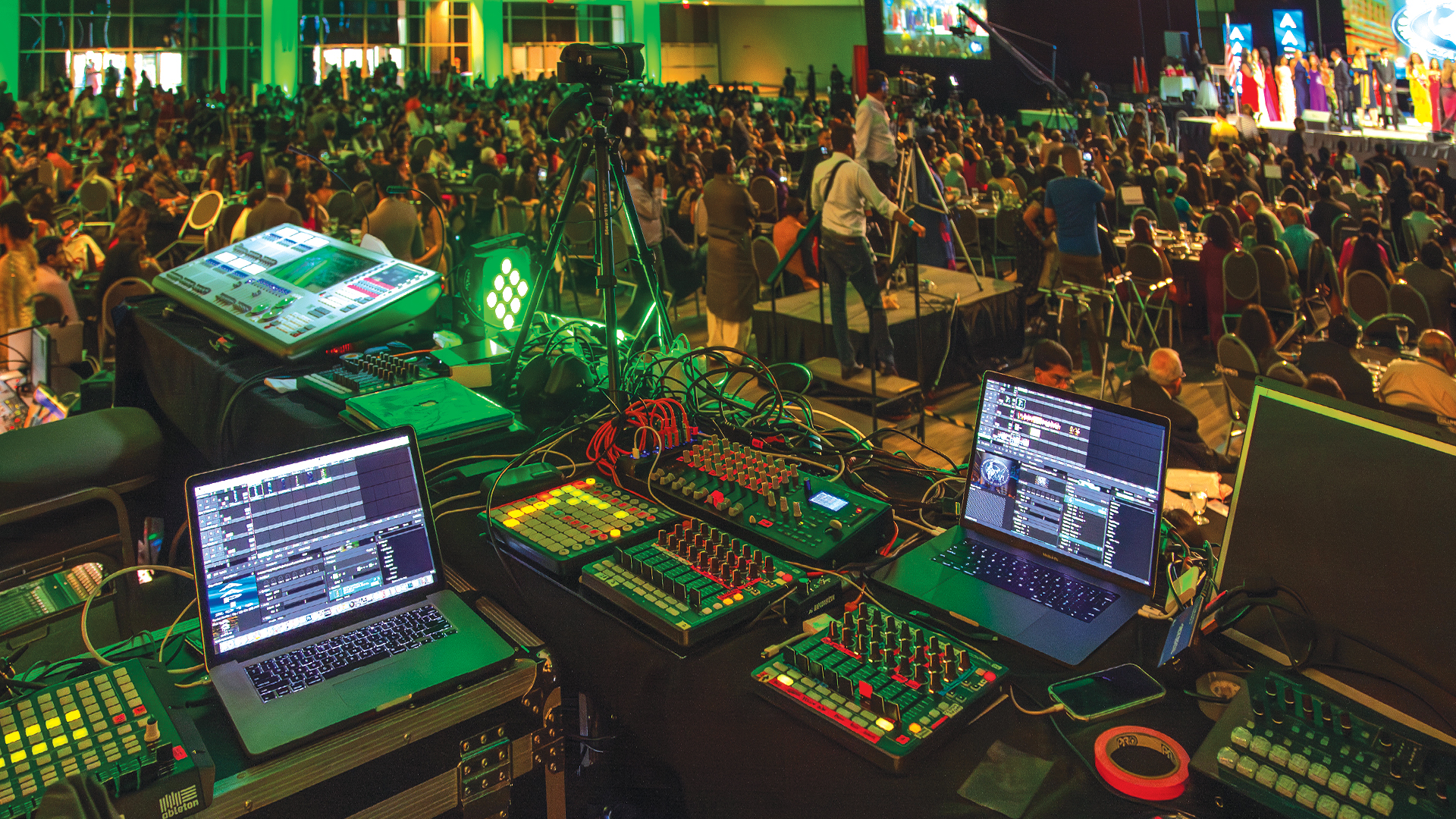
Every audio engineer knows the feeling: you’ve deployed the PA system according to manufacturer specifications, verified every connection, confirmed amplifier settings, and the system has decided it will sound exactly how it wants to sound. Professional sound reinforcement equipment develops character over time character that sometimes conflicts dramatically with the engineer’s intentions. These aren’t equipment failures; they’re equipment opinions, expressed through frequency response curves, coverage patterns, and timing behaviors that confound even veteran operators.
The Heritage of Sound System Stubbornness
The history of concert sound is essentially a chronicle of battles between engineers and equipment. When Altec Lansing introduced the Voice of the Theatre system in 1945, it established principles of controlled directivity that would define professional audio for decades. Those early systems had pronounced sonic signatures that colored everything passing through them—a character that engineers either loved or adapted around.
The Grateful Dead’s Wall of Sound, constructed in 1974, represented perhaps the most ambitious attempt to create a PA system without attitude. By dedicating separate speaker arrays to each instrument and eliminating the traditional mixing paradigm, the Dead hoped to achieve transparency impossible with conventional systems. The system worked—when conditions aligned perfectly. More often, it exhibited precisely the stubborn behavior its designers hoped to eliminate, generating feedback, phase issues, and coverage inconsistencies that required constant attention from a dedicated crew of eleven audio engineers.
The Line Array Revolution
Modern line array technology promised unprecedented consistency. When L-Acoustics V-DOSC debuted in 1992, its wavefront sculpture technology offered pattern control that traditional point-source systems couldn’t match. The J-shaped array curves that now dominate concert venues emerged from Christian Heil’s research, enabling coverage that remained consistent across vast audience areas.
But line arrays have their own personalities. The d&b audiotechnik J-Series responds differently to the same input depending on array configuration, amplifier drive, and venue acoustics. Engineers transitioning from Meyer Sound LEO to JBL VTX V25-II discover that their carefully developed mixing approaches produce unexpected results. Each system imposes its character on the program material, requiring engineers to adapt their techniques to each brand’s sonic philosophy.
Amplifier Personalities
The power amplifiers driving PA systems contribute their own attitude to the sonic equation. The Crown I-Tech HD series brought sophisticated DSP processing directly into amplifier chassis, enabling speaker-specific processing that optimizes system performance. That processing also means the amplifier makes decisions about signal handling that the mixing engineer may not have anticipated.
The Lab.gruppen PLM+ series integrates Lake processing with amplification, providing extraordinary control over system behavior. However, that control requires comprehensive understanding of the processing architecture. An engineer unfamiliar with Lake Controller software may discover that the amplifier is applying processing they neither requested nor understood. The system sounds different from expected not because it’s malfunctioning but because invisible processing is actively shaping the output.
Thermal management adds another dimension of amplifier attitude. As Class D amplifiers heat during extended operation, their behavior can shift subtly. The Powersoft X8 monitors internal temperatures and adjusts output stage behavior accordingly. An amp that delivered punchy low end during soundcheck might sound slightly softer during the third hour of a long show as thermal protection algorithms engage.
The DSP Processing Paradox
System processors like the BSS Soundweb London and Biamp TesiraFORTE enable sophisticated signal routing and processing that was impossible in analog-only systems. These processors also enable processing mistakes that persist invisibly until someone investigates why the system sounds wrong. A limiter set too aggressively, an EQ band left from a previous show, a routing matrix with unexpected feedback paths—any of these can give a PA system apparent attitude that actually originates in processor configuration.
The QSC Q-SYS platform has become increasingly common in installed sound systems, offering extraordinary flexibility through software-defined processing. That flexibility means the same hardware can behave completely differently depending on its programming. An engineer arriving at a venue with Q-SYS might find the system configured for speech reinforcement, requiring fundamental reconfiguration for music reproduction. The PA hasn’t developed attitude; it’s simply running the wrong personality.
Room Acoustics: The Invisible Adversary
No discussion of PA attitude is complete without acknowledging room acoustics. The same speaker system deployed in a warehouse versus a theater produces dramatically different results. The Meyer Sound Leopard line array might perform beautifully in one space and fight the engineer relentlessly in another. The speakers haven’t changed; the acoustic environment transforms their behavior into something unrecognizable.
Tools like SMAART from Rational Acoustics and SysTune from AFMG enable measurement-based system optimization. These analysis platforms reveal the actual behavior of the PA in its deployment environment, often exposing dramatic departures from specification sheet predictions. An engineer who measured their Martin Audio MLA system might discover that room modes at 125 Hz create a 12 dB buildup that no amount of mixing technique can overcome. The system’s “attitude” is actually the room’s acoustic signature imposed on every sound passing through.
The Subwoofer Situation
Subwoofers deserve special mention in any discussion of PA personality. Low-frequency reproduction involves wavelengths measured in meters, interacting with room boundaries in complex patterns. The d&b audiotechnik SL-SUB might couple beautifully with a concrete floor while producing muddy, undefined bass over a wooden stage. The L-Acoustics KS28 configured in cardioid arrays might achieve excellent front-to-back rejection in one venue and minimal difference in another, depending on boundary reflections and deployment geometry.
Phase relationships between subwoofers and main arrays generate some of the most frustrating system attitude. A time alignment that produces coherent bass in the center seating area might create cancellation zones at the edges. Engineers chasing perfect alignment often discover that optimizing one location degrades others. The system isn’t misbehaving—it’s obeying physics in ways that create no universally optimal solution.
Network Audio Complications
The shift to Dante and AVB network audio has introduced new sources of system personality. Network audio depends on precise timing synchronization across potentially dozens of devices. When that synchronization falters, audio quality degrades in ways that mimic traditional PA problems. Clicks, pops, and subtle distortion that seem to indicate speaker damage might actually result from network timing issues invisible to traditional troubleshooting approaches.
The Audinate Dante protocol requires managed network switches with specific configurations for reliable operation. An engineer troubleshooting apparent PA attitude might eventually discover that a network switch is dropping packets under heavy load, creating intermittent audio problems that seem to correlate with program dynamics. The PA system is faithfully reproducing every sample it receives; the network simply isn’t delivering all the samples.
Practical Approaches to Managing System Character
Successful system engineers develop systematic approaches to understanding and working with PA system personality. The process begins with baseline measurement: capture transfer function data, impulse responses, and phase information for the system in its deployment environment. Tools like the Lake LM 44 processor can store these measurements, enabling comparison against reference data to identify when system behavior has changed.
Document everything. When a system sounds particularly good—or particularly problematic—record the settings, measurement data, and environmental conditions. Over time, patterns emerge that help predict system behavior in various scenarios. The engineer who has deployed the same JBL VTX A12 arrays across fifty venues develops intuition for how the system responds to different acoustic environments and can adjust approach accordingly.
Build relationships with rental companies and their system technicians. The Clair Global and 8th Day Sound systems touring major acts include extensive optimization built on thousands of deployment hours. The technicians who maintain and deploy these systems have deep knowledge of their personalities—knowledge they’ll share with engineers who approach them respectfully.
Finding Harmony with Hardware
The PA systems that develop the most troublesome attitude are often those that engineers try to force into roles they weren’t designed for. A QSC KLA series portable line array excels in its intended applications but will resist attempts to achieve stadium-level performance. A Meyer Sound ULTRA-X40 point-source system delivers precise coverage for specific applications but won’t behave like a line array regardless of how it’s deployed.
Understanding manufacturer design intent helps manage expectations. Each PA system embodies decisions about tonal character, coverage behavior, and transient response. Engineers who understand those decisions can work with system characteristics rather than fighting them. The Adamson S10 will never sound exactly like the Martin Audio WPS; accepting that reality and adapting technique accordingly produces better results than attempting to EQ one system into sounding like another.
Ultimately, PA system attitude reflects the intersection of design philosophy, environmental factors, configuration choices, and the program material being reproduced. The engineer who approaches sound reinforcement as collaboration with equipment rather than domination over it achieves consistency impossible through technical force alone. Every sound system has personality. The professional skill lies in understanding that personality and channeling it toward the artistic goals of each production.
